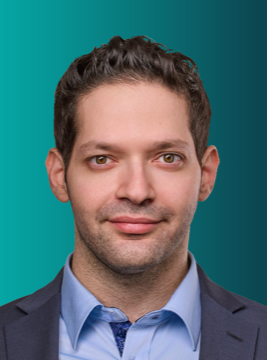
Headshot

David Burstein, PhD

Assistant Professor in the Department of Psychiatry at the Icahn School of Medicine at Mount Sinai.
Independent Investigator and Data Scientist at the VISN 2 Mental Illness Research, Education and Clinical Center (MIRECC).

Phecoder recovers curated code lists, and surfaces candidates for expert review
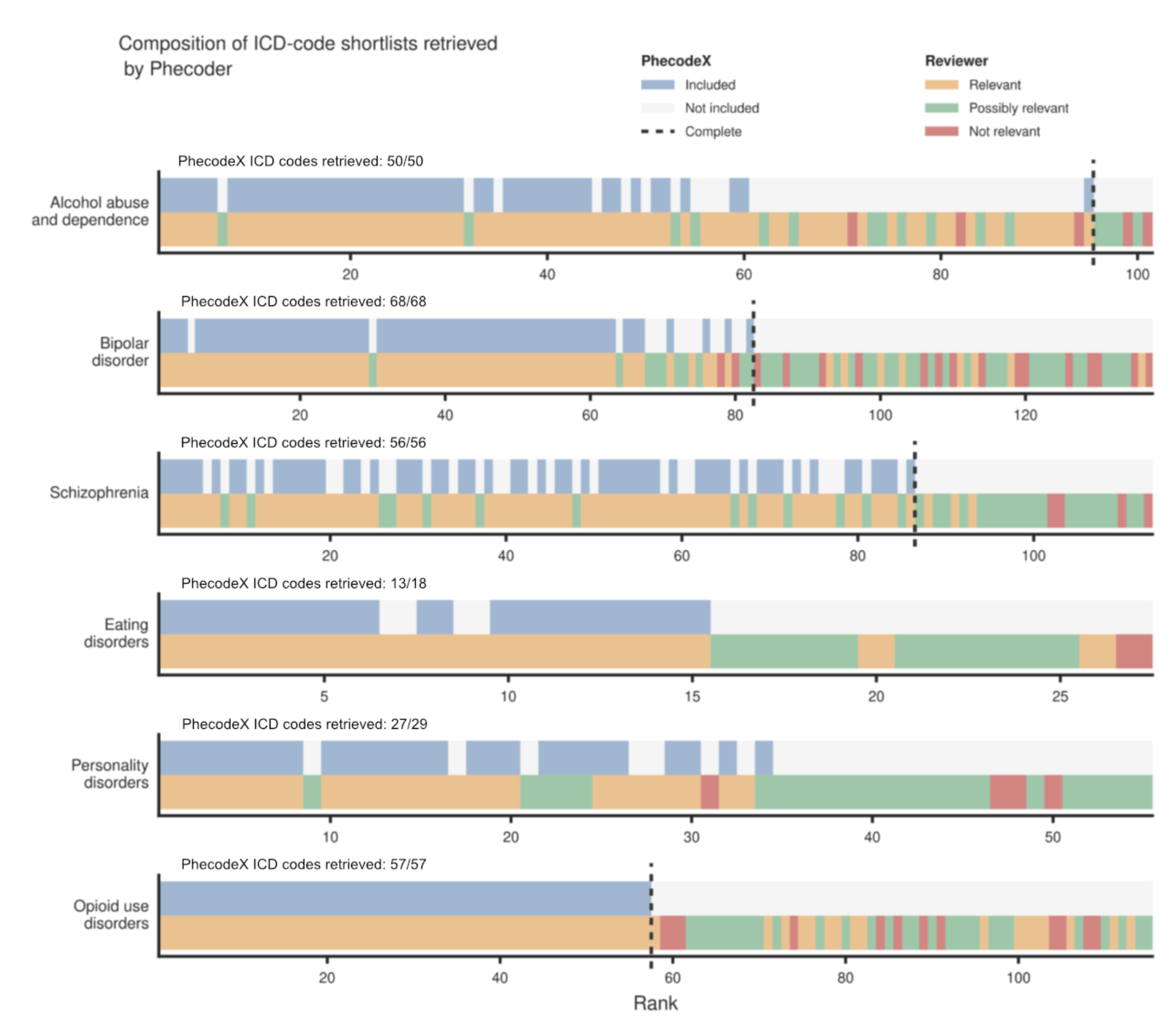
PhecodeX Included Not included Complete
Reviewer Relevant Possibly relevant Not relevant
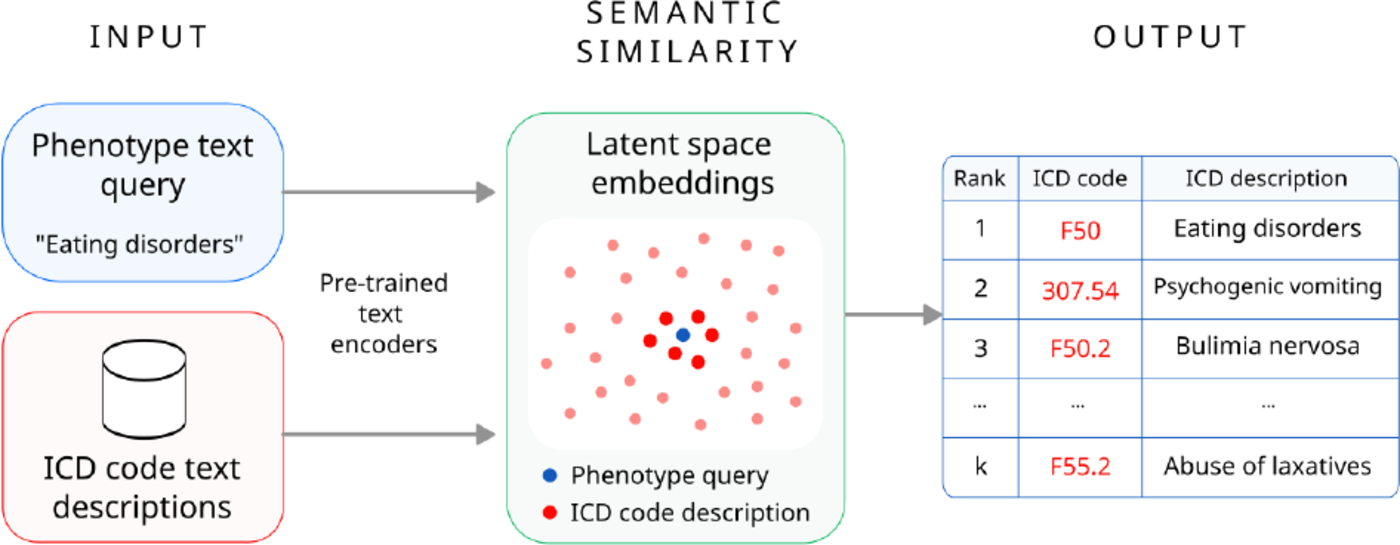
Phecoder is our open-source framework for auditable, AI-assisted curation of ICD-based phenotypes. It ranks candidate ICD codes against a free-text phenotype description, recovering the established PhecodeX mappings in full (dashed line) while surfacing additional codes that expert reviewers rated clinically relevant. Phecoder flags candidates for expert adjudication rather than validating case status. Preprint on medRxiv. Click the figure to view all six phenotypes.Swipe the figure to explore it, or tap to view all six phenotypes.

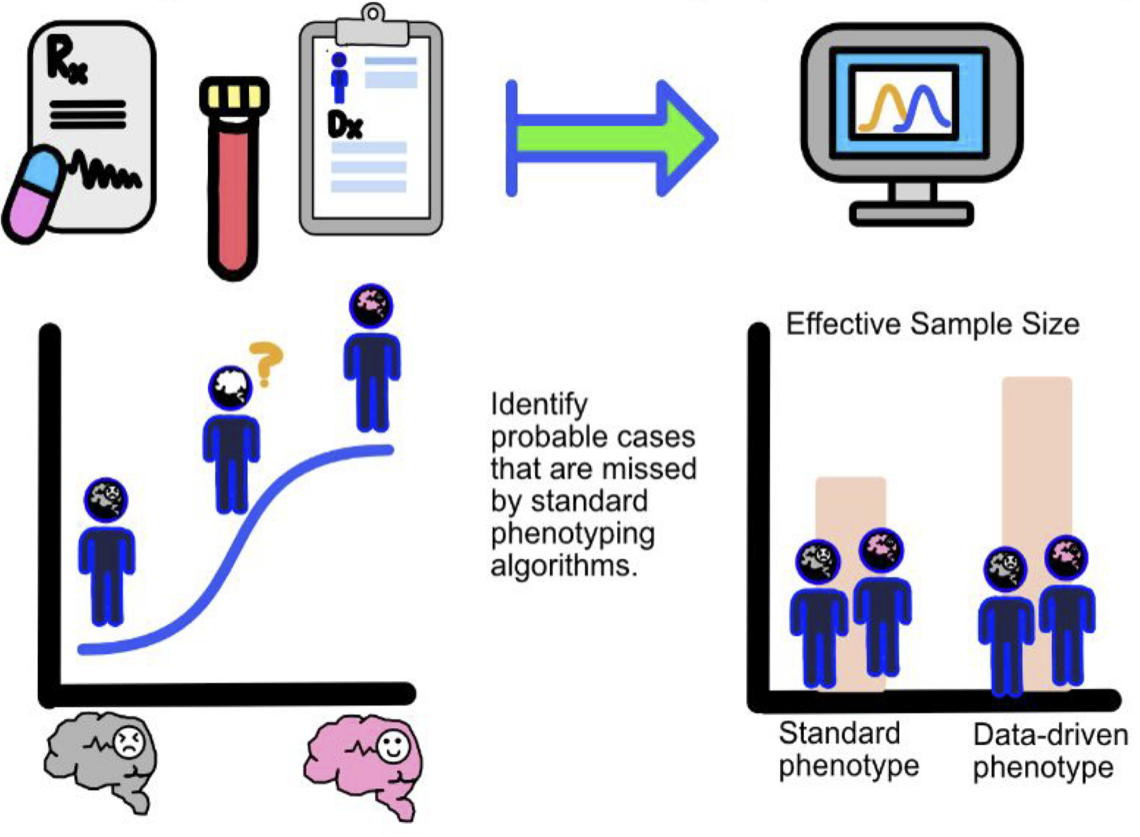
My research develops and applies artificial intelligence and machine learning methods to large-scale biobank and electronic health record data to improve how neuropsychiatric traits are defined, measured, and studied at population scale. My work focuses on computational phenotyping and the integration of clinical and genetic data to support reproducible, scalable analyses, including genome-wide association studies, advancing AI-driven approaches for studying complex psychiatric conditions across diverse patient populations. In recognition of my research, I received a VA Merit Award for Mitigating Genomics Research Disparities in the Million Veteran Program.
Curriculum Vitae

Education

  • PhD in Mathematics (2011-2016)

    University of Pittsburgh

  • BS in Mathematics (2007-2011)

    University of Maryland

    Summa Cum Laude and University Medal Finalist

Work Experience

  • Assistant Professor (2024 - Present)

    Icahn School of Medicine at Mount Sinai, Department of Psychiatry

    • Supervise and collaborate with researchers on applying machine learning approaches to electronic health record data for genetic analyses.
  • Principal Investigator and Data Scientist (2024 - Present)

    James J. Peters VA Medical Center

    • Secured $1.1 million in funding to leverage statistical approaches that mitigate genomic research disparities in the Million Veteran Program.
  • Senior Data Scientist (2019 - 2024)

    Icahn School of Medicine at Mount Sinai

    • Leveraged machine learning techniques to identify eligible prescriptions 340b pricing.
      The pipeline generated $550k revenue for Q4 2020 alone and a projected $2 million in revenue for 2021.
  • Senior Data Scientist (2018 - 2019)

    Fifth Third Bank

    • Collaborated with stakeholders to leverage causal inference to measure the success of multimillion dollar investments in bank products and services.
  • Visiting Assistant Professor (2016 - 2018)

    Swarthmore College, Department of Mathematics and Statistics

    • Taught introductory and upper-level courses in Calculus, Probability and Statistics. Supervised teaching assistants and graders.

Modeling diagnostic dropout boosts precision for schizophrenia

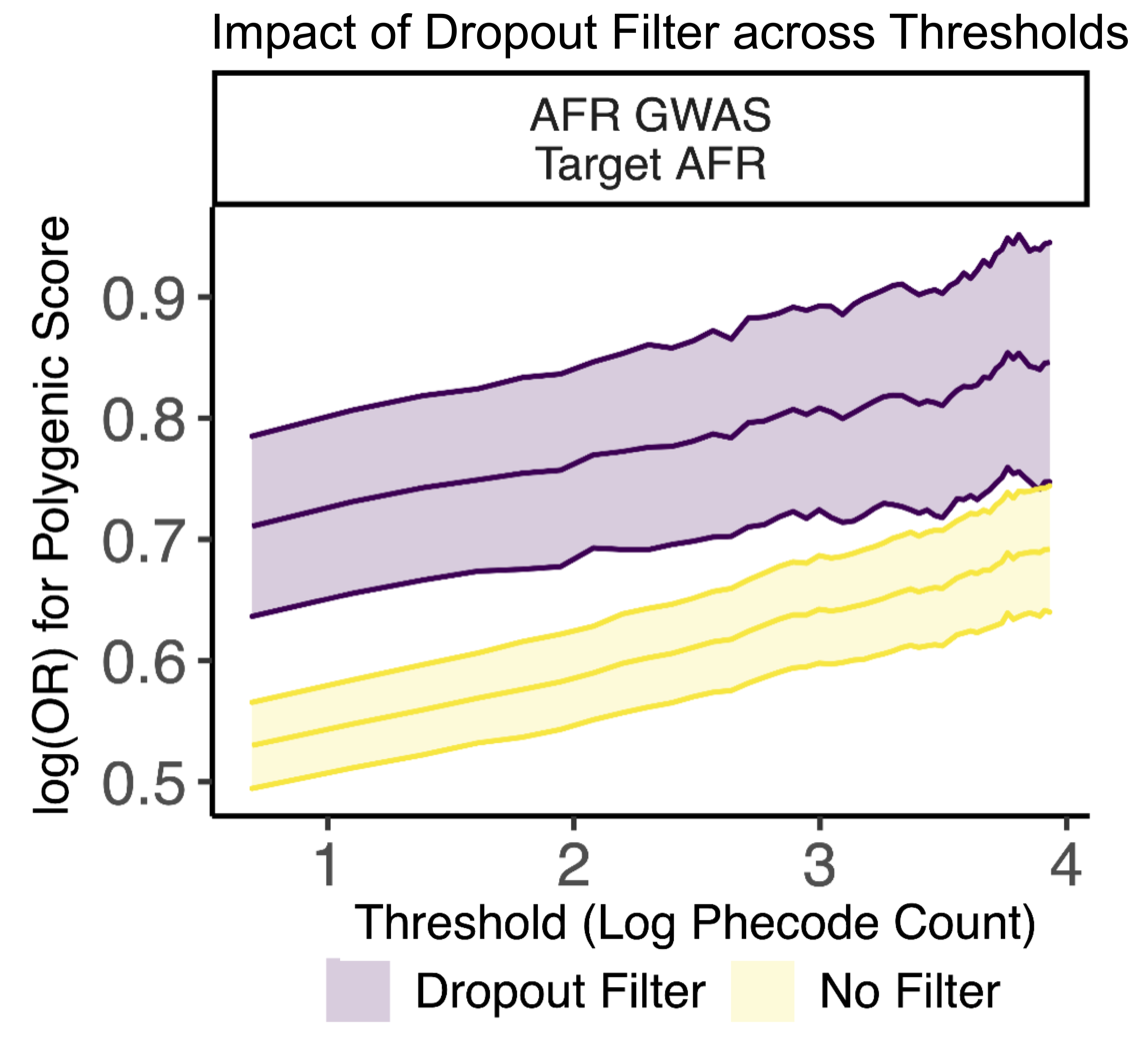
Dx dropout AUPRC = 73.4%, compared to phecode AUPRC = 62.7%

We assess our XGBoost diagnosis (dx) dropout model for predicting schizophrenia cases from electronic health record data, benchmarked against chart-review labels. Patients who stopped receiving schizophrenia diagnoses were likely misdiagnosed. We compare our approach with the phecode methodology, which prioritizes cases by diagnosis count. Model approaches are highlighted by different colors.

Model-derived binge-eating disorder phenotype identifies novel risk loci

Top predictors of the model, sized and colored by −log10 p

Binge-eating disorder is heavily underdiagnosed: only 0.1% of Veterans carry the diagnosis, against an established US prevalence of roughly 3%. We model it from electronic health record data in the Million Veteran Program to recover those missing cases. Genome-wide analysis of the resulting phenotype identified novel risk loci and implicated iron metabolism, published in Nature Genetics.

Selected Publications

Selected Talks

  • Million Veteran Program (MVP) Science Meeting

    March 2025, Virtual Talk.

  • American Society of Human Genetics (ASHG) Annual Meeting

    November 2024, Denver, Colorado: USA.

  • PsycheMERGE Diversity Initiative

    February 2024, Virtual Talk.

  • American Society of Human Genetics (ASHG) Annual Meeting

    November 2023, Washington D.C.: USA.

  • PsycheMERGE Analysis Network Wide Call

    March 2023, Virtual Talk.

Lab Members

Current Members

Alumni

Contact

If you have any questions or would like to get in touch, please email me at .